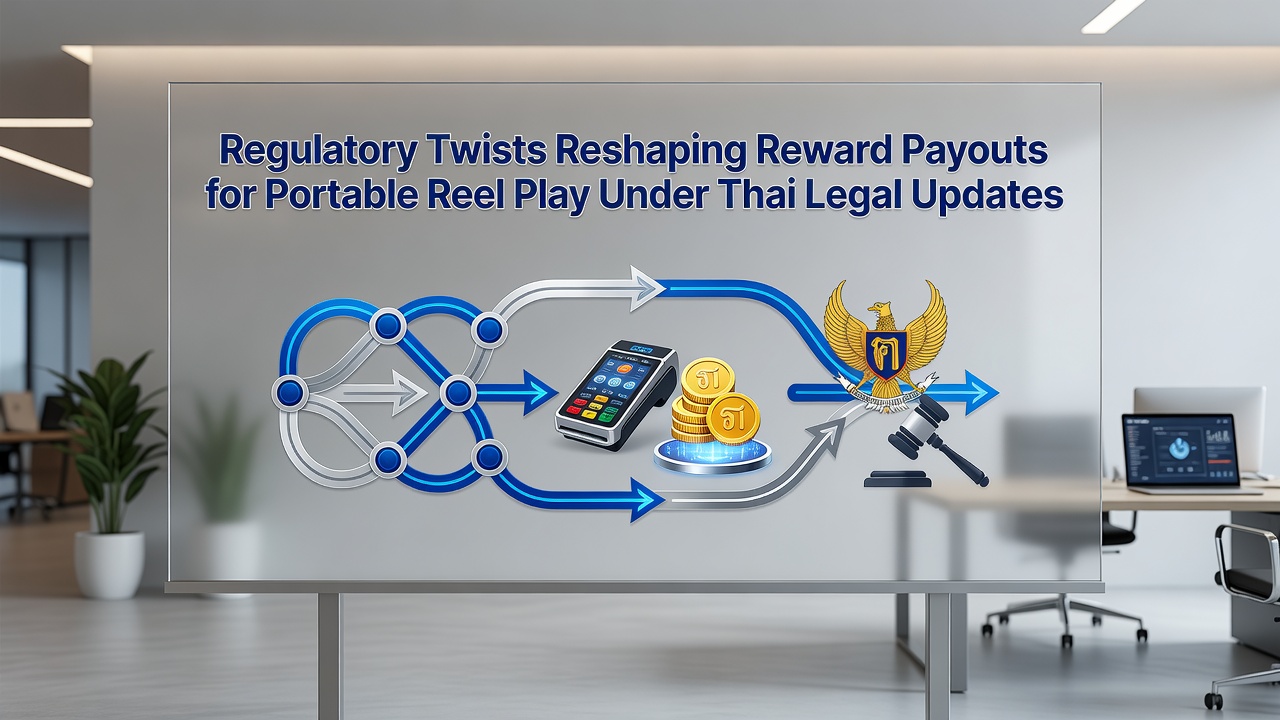
Regulatory Twists Reshaping Reward Payouts for Portable Reel Play Under Thai Legal Updates
Thailand has introduced several amendments to its gaming statutes that directly affect how operators handle reward distributions in portable reel play, and these changes have taken shape through a series of cabinet decisions and ministerial notifications issued over the past eighteen months. Observers note that the focus has shifted toward stricter verification protocols for payout processing, particularly when players access mobile slot titles through digital wallets or international payment rails.
Background on Existing Frameworks
Thai law has long classified most forms of gambling as illegal under the Gambling Act B.E. 2478, yet enforcement around online platforms has remained inconsistent, and portable reel play has operated in a regulatory gray zone for years. Data from industry monitoring groups shows that mobile slot participation among Thai users grew steadily between 2022 and 2025, driven by widespread smartphone adoption and the convenience of instant deposits. Researchers at regional academic institutions have documented how reward structures in these games often included loyalty bonuses, free spins, and cashback mechanisms that bypassed traditional banking channels.
But here's the thing: the absence of clear licensing left operators without standardized rules for reporting winnings or withholding taxes, which created friction once authorities began tightening oversight. Figures released by the Revenue Department indicate that unreported gambling income reached notable levels, prompting the government to consider targeted updates rather than outright prohibition.
Key Legal Changes Taking Effect
New provisions scheduled for full implementation in August 2026 require operators to integrate real-time identity verification systems before releasing any reward exceeding a specified threshold. These rules apply specifically to portable reel play titles, mandating that platforms confirm player residency and age through cross-referenced national ID databases. According to documentation from Thailand's Ministry of Digital Economy and Society, the goal centers on reducing money-laundering risks while preserving legitimate entertainment options.
Another adjustment limits the frequency of bonus conversions into withdrawable funds, requiring a minimum play-through period that operators must log and report monthly. Industry organizations such as the Asia Pacific Gaming Association have tracked similar measures in neighboring jurisdictions, where comparable controls reduced dispute rates between platforms and users.
Impact on Payout Mechanics
Operators have begun adjusting their backend systems to accommodate the new reporting requirements, and several have introduced tiered payout schedules that separate promotional rewards from base game winnings. This separation allows platforms to apply different tax treatments and compliance checks without disrupting the core reel mechanics. Studies from research centers in Southeast Asia indicate that such segmentation helps maintain player engagement while satisfying audit trails demanded by regulators.

Those who have examined the draft guidelines note that reward caps tied to daily activity will become mandatory, and platforms must display these limits clearly within the mobile interface. The changes also extend to how progressive jackpots accumulate across portable devices, with operators required to segregate contributions into auditable pools. Data collected by independent analytics firms reveals that early adopters of these protocols experienced a temporary dip in average session length before stabilization occurred.
Comparative Approaches in Other Regions
Thailand's approach draws partial inspiration from frameworks already active elsewhere, and one notable reference appears in guidelines published by the Canada Revenue Agency concerning online gaming taxation. Canadian rules emphasize transparent record-keeping for bonus redemptions, a principle that Thai regulators have adapted to local enforcement capacities. Another point of reference comes from reports issued by the OECD's Global Forum on Transparency, which highlights best practices for cross-border payout verification that several Asian markets have started to incorporate.
Turns out these international models helped shape the August 2026 timeline, giving Thai operators a defined window to upgrade their portable reel infrastructure. Observers point out that platforms serving multiple jurisdictions often reuse compliance modules across markets, which has accelerated adoption in Thailand despite the unique legal context.
Operational Adjustments by Platforms
Many operators have already begun testing revised reward engines that automatically flag high-value payouts for manual review, and this process aligns with the upcoming ministerial notification on electronic transaction monitoring. People involved in platform development describe how the integration of API connections to government verification services has required substantial engineering resources, yet the result provides clearer audit paths for both regulators and users.
One case study shared within trade circles involves a mid-sized operator that restructured its loyalty program to issue rewards only after completing identity checks, leading to a measurable reduction in chargeback incidents. Such examples illustrate how the regulatory twists are prompting concrete changes rather than remaining theoretical.
Conclusion
The evolving Thai legal landscape continues to influence how portable reel play rewards reach players, with the August 2026 milestones marking a significant checkpoint for compliance. Data indicates that platforms investing early in verification technology stand better positioned to maintain uninterrupted service once the new rules activate. Researchers continue to monitor participation trends and payout volumes, providing ongoing insight into how these adjustments reshape the mobile gaming environment within Thailand's broader regulatory framework.